What a trailer cross member actually does
On a dry van, reefer or flatbed, the main beams run front to back and the cross members run side to side between them. The floor (boards, aluminum or steel) sits on top of the cross members, and the weight of your freight and forklift traffic goes through them into the beams. They also keep the frame square. Because they sit low and close to the road, they collect salt, water and slush all winter, which is hard on steel in Ontario.
Warning signs to check for
- Rust streaks or flaking on the underside of a cross member, especially near the welds at each end.
- Fresh, shiny hairline cracks at a weld or where the member meets the main beam. Shiny metal inside a crack usually means it is moving right now.
- A soft or bouncy spot in the floor when you walk it or when a pallet jack crosses it.
- Dips or waves in the floor that were not there before.
- Gaps or a bent member after a heavy forklift hit, an overloaded point, or a hard dock strike.
- Rust pits you can poke through with a screwdriver: the steel is already too thin to trust.
The best time to look is with the trailer empty, from underneath, with a flashlight and a wire brush to clear scale. Take photos from both sides as you go; they are also what we need to quote the job.
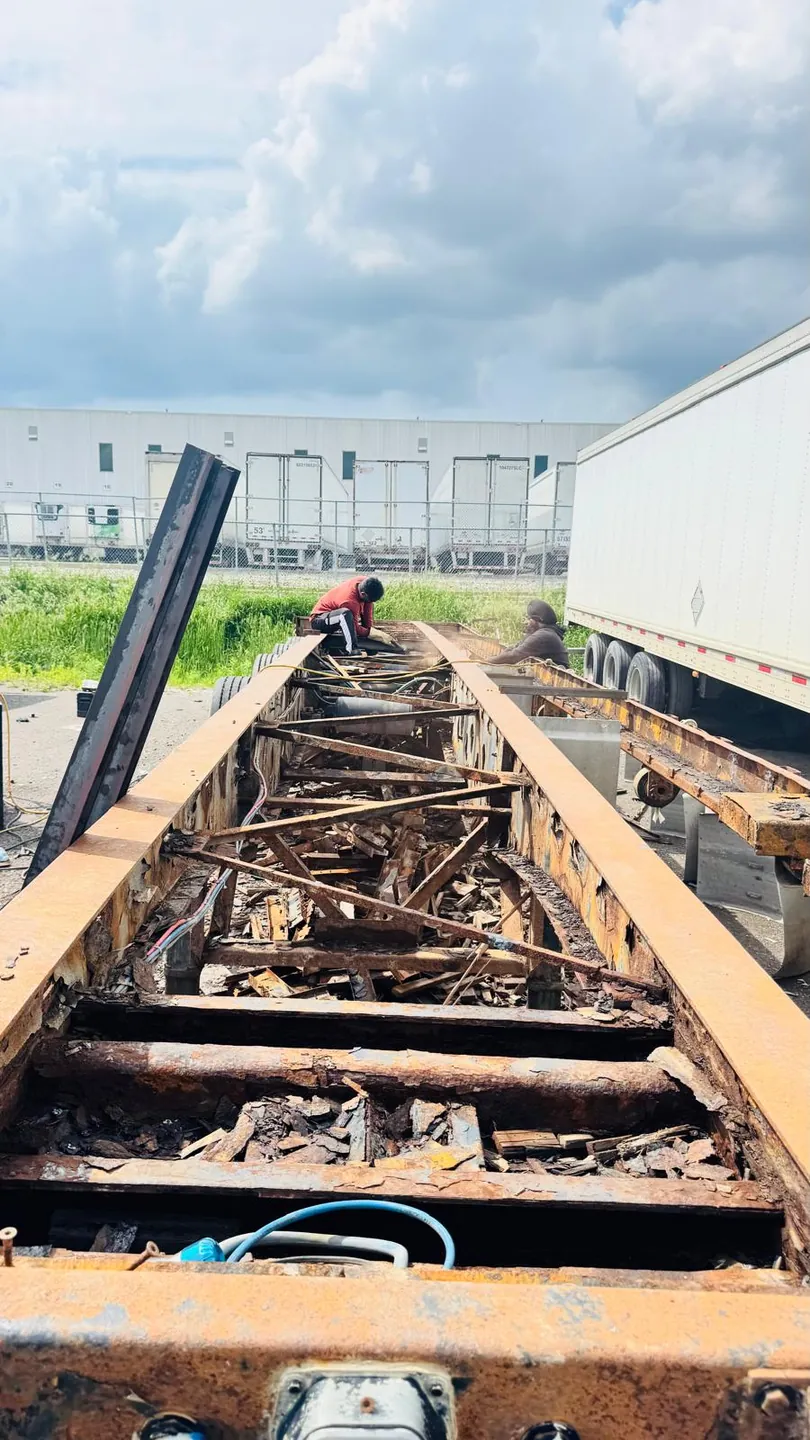
Can you keep hauling with a cracked cross member?
We cannot judge that from a description, and we will not pretend to. What we can say is how to think about it:
- Cracks grow. Vibration and load keep working a crack. A hairline today can be a full break after a few more trips.
- Load matters. Heavy, concentrated loads, like steel coils or a loaded forklift driving in and out, are harder on a weak member than light freight.
- One failed member shifts load to its neighbours. That can start more cracks nearby.
- A failed floor is also an inspection and safety problem. A sagging floor or a visibly broken structural member is not something to leave for later.
If the trailer is already loaded and you are not sure, the safest move is to stop, take photos, and call before the next leg. If it is empty, get it repaired before the next load rather than after.
Weld it or replace it?
This is the question we answer on almost every cross member job.
- Weld and reinforce works when the crack is clean and the steel around it is thick and sound. We grind out the crack, weld it, and often add a reinforcing plate so the stress is not sitting on the same spot again.
- Cut out and replace is the right call when the member is rusted thin, bent, or has cracked more than once. We cut the damaged piece out, fit new steel and weld it to the beams so it carries the floor like new.
- Rebuild a section applies when several neighbouring members are bad, for example across a flatbed deck. That is usually a yard job.
A weld on rusted, thin metal does not last, so a good welder will tell you when welding is not the answer, even though it is the cheaper-looking option.
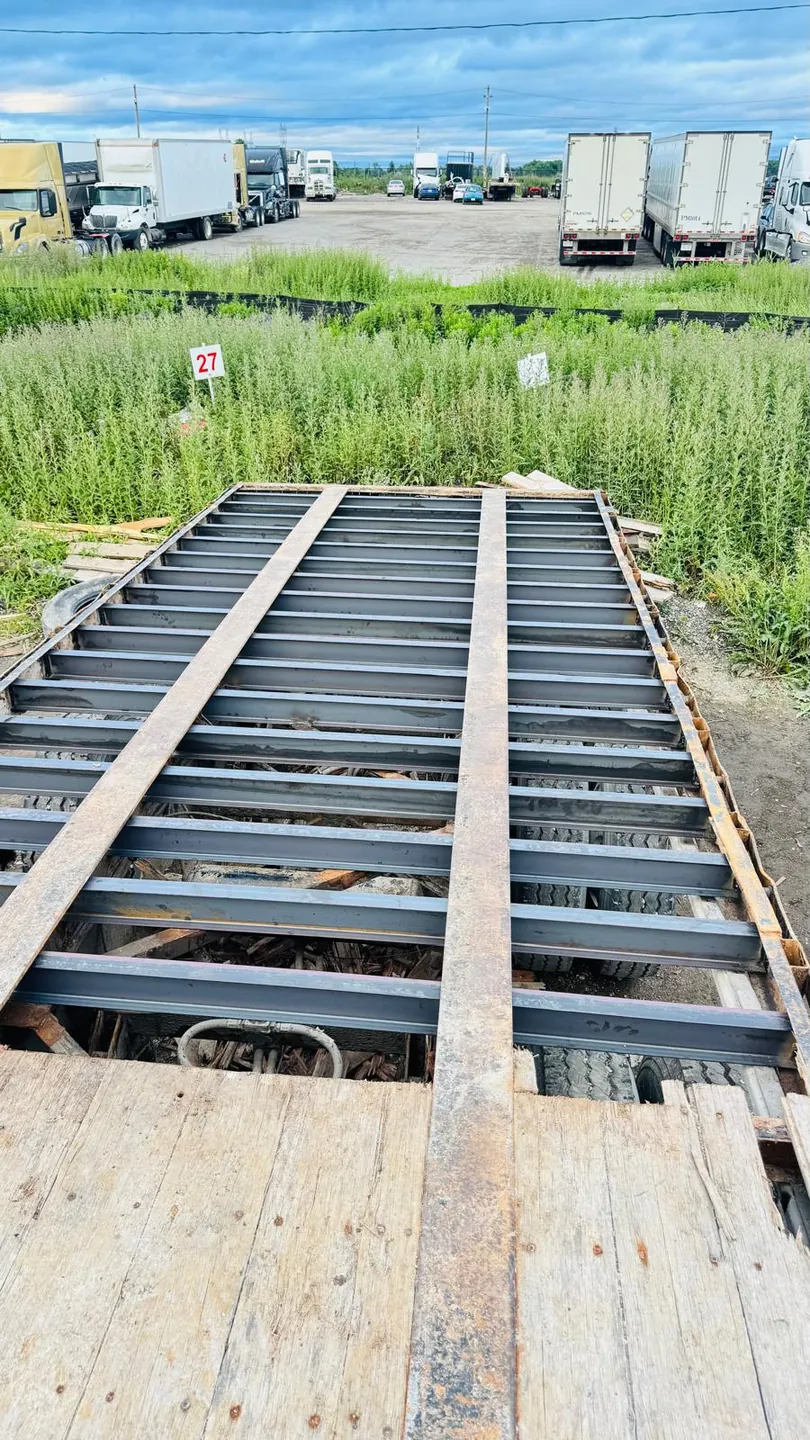
What a proper repair looks like, step by step
- Look at the whole area, not only the crack you can see. We check neighbouring members and the welds at the beams.
- Clean back to bare steel. Paint, undercoating and rust have to come off before welding.
- Cut out what is bad. Cracks are ground out, and thin or bent members are removed.
- Fit and weld new steel or reinforcement so the floor is level and supported again.
- Check the floor and frame afterwards so the trailer sits square and the floor is flat.
- Protect the new work so it does not rust out again next winter.
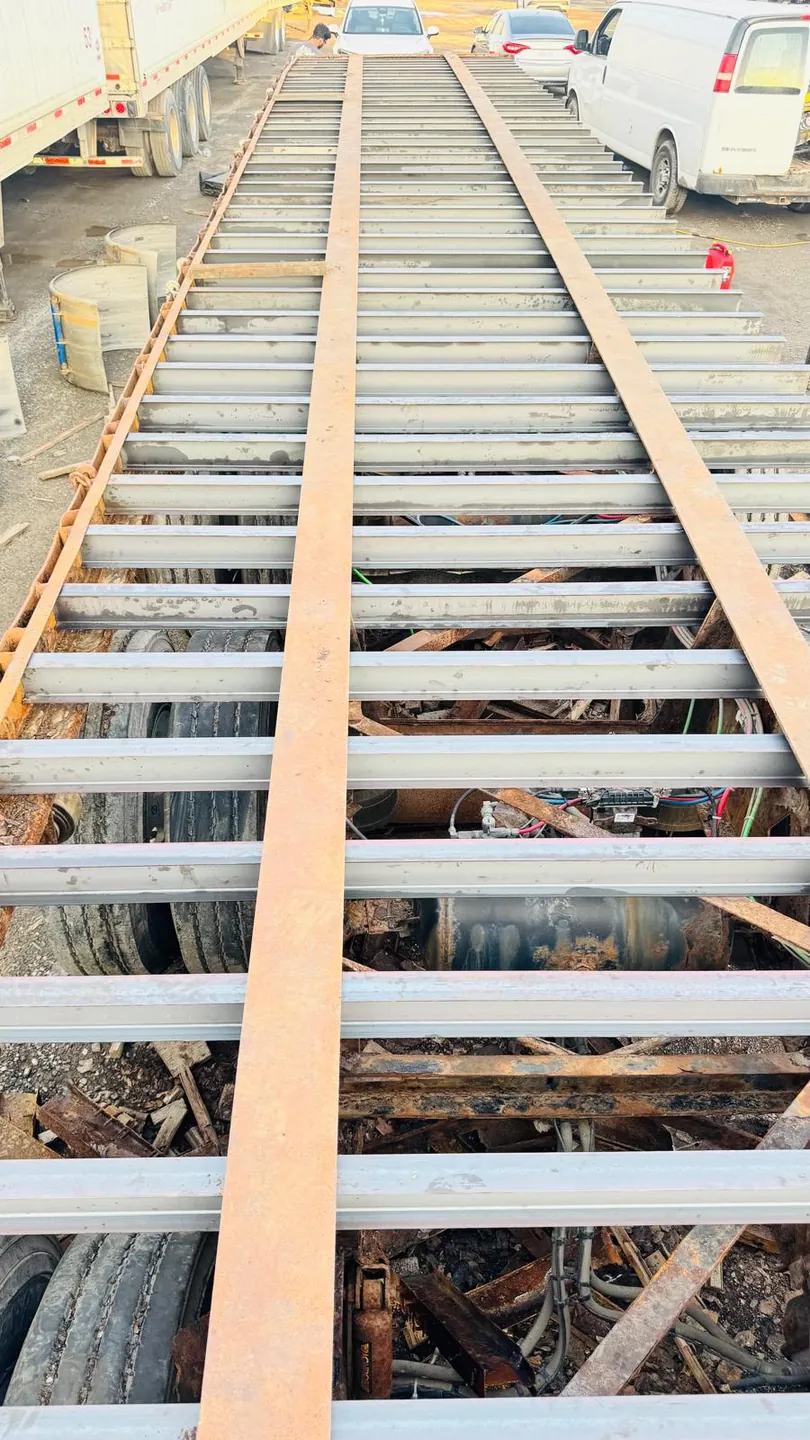
On-site or in the yard?
Because our welding truck comes to you, a lot of cross member and floor support work can be done in your lot or yard, without towing and without losing a day. Bigger rebuilds come into our yard where we can work on them properly. Either way, start with photos: send pictures from underneath and above to WhatsApp 437-985-7311 and we will tell you what we think and give you a quote.
How to make cross members last longer
- Wash salt off the underside during winter when you can.
- Inspect underneath whenever you inspect the suspension and landing gear.
- Keep forklift loads and heavy point loads spread out where possible.
- Fix small cracks and surface rust early; this is always cheaper than a rebuild.
Related work we do: trailer welding & fabrication, mobile trailer welding, suspension & bogie repair and trailer door repair. We serve Brampton, Mississauga, Toronto, Vaughan and Milton.
Frequently asked questions
Can I drive with a cracked trailer cross member?
It depends on where the crack is and whether the trailer is loaded. A small crack in an unloaded trailer that has to reach a shop is a very different risk from a cracked cross member under a loaded floor. Cross members carry the floor, so a crack can spread under load. Send us photos and we will tell you honestly whether it should move or be repaired where it sits.
Can a cross member be repaired on-site, or does it need to come to a yard?
Many cross member and floor-support repairs can be done where the trailer is parked, because we bring a fully equipped welding truck to you. Bigger rebuilds, such as several rotted cross members across a flatbed deck, are better done in our yard where we can work on them properly.
Should a cross member be welded or replaced?
A clean crack in otherwise sound steel can often be welded and reinforced. If the member is thinned by rust, bent, or has repeated cracks, cutting it out and replacing it is the stronger fix. We look at the steel around the crack before choosing.
How much does trailer cross member repair cost?
It depends on how many members are affected, the trailer type, and whether floor boards or skins also need work. We do not guess prices from a description. Send photos on WhatsApp to 437-985-7311 and we will quote from the pictures.
Do you repair reefer and dry van floors as well as flatbeds?
We repair structural floor supports on dry vans, reefers and flatbeds, and we handle floor and deck work on flatbeds. Photos from underneath and from above help us plan the job.
What areas do you cover?
We work on-site across Brampton, Mississauga, Toronto, Vaughan and Milton, 7 AM to 7 PM, seven days a week.