What a deer guard actually protects
On most highway tractors the parts behind the grille are the expensive ones: the radiator, the charge air cooler, the A/C condenser and the headlight assemblies. A strike that cracks one of them can leave you unable to keep driving, even when the cab and frame are fine. A guard spreads the impact across a steel frame mounted to the truck instead of the grille and hood. It also helps against road debris and low-speed bumps with posts, gates and other vehicles in yards.
A guard does not make a collision harmless. A big animal at speed can still bend or push in a guard. What it changes is how much of the front end is damaged and whether you can drive away.
Who gets the most from one
- Drivers on rural and northern routes and at dawn, dusk and night, when animals are on the road.
- Owner-operators, where one truck down for a few weeks is the whole business.
- Fleets with regular highway lanes, where front-end claims and downtime add up.
If your truck mostly runs short urban hauls and yard work, a guard matters less, and a plain, strong bumper may be enough.
Standard or heavy-duty?
Standard deer guards protect the grille, radiator and headlights from animal strikes and road debris while keeping weight down. Heavy-duty builds use thicker material and extra bracing and are meant for long-haul and northern runs where wildlife hits are more common. We build both versions in-house.
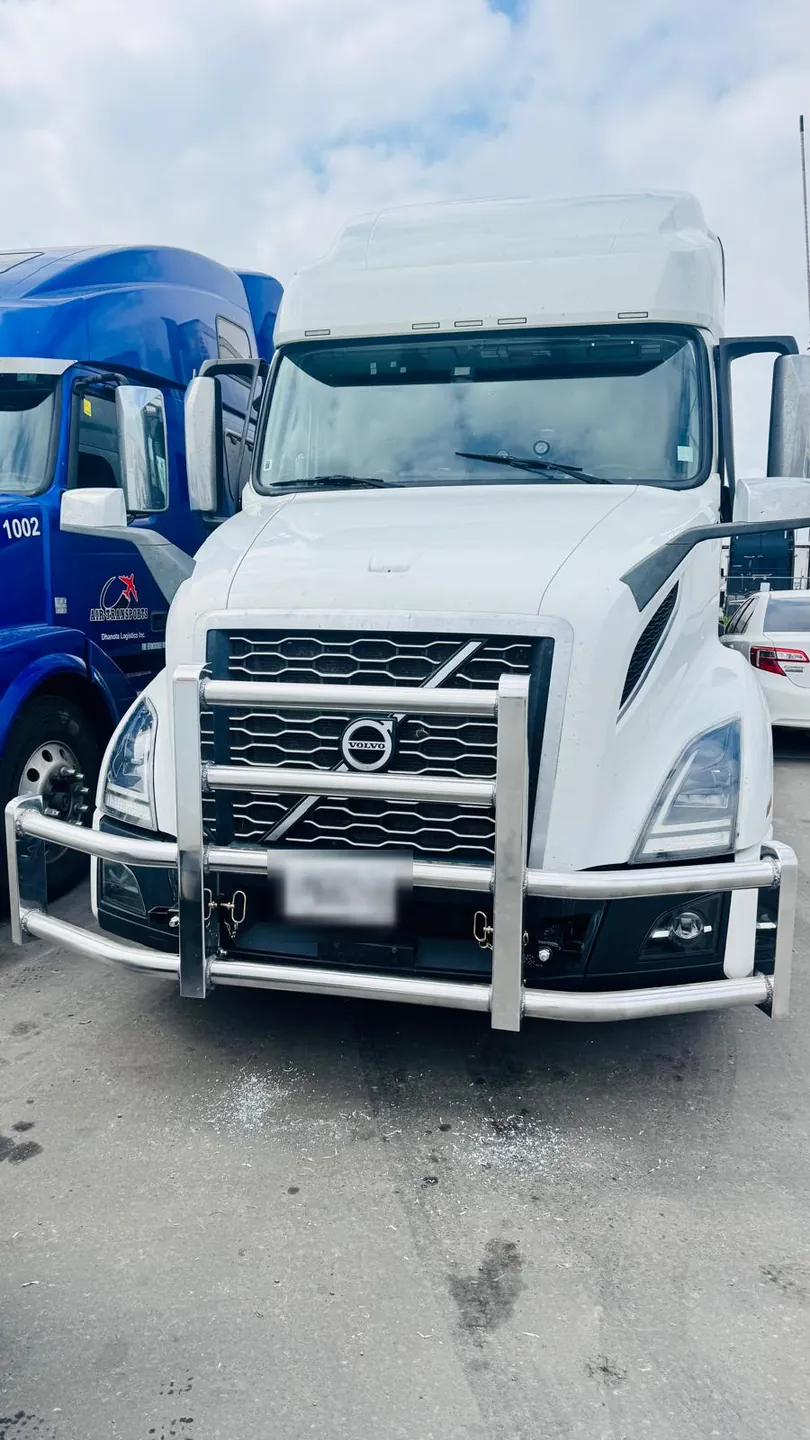
Heavier is not always better. A very heavy guard adds weight to the steer axle and costs a little fuel, and a light one may fold in a real strike. The honest way to choose is by route and truck: what you hit, how often, and what your steer axle can carry.
What to check before you buy or build
- Fitment. Guards are made for a specific make, model and year, and body styles change. We confirm fitment from your make, model and year before we build.
- Steer axle weight. Check your steer axle rating and what you carry on it now. Ask what the guard will add.
- How it mounts. A guard is only as good as what it is bolted or welded to. It should be tied into solid frame points, not just the bumper or the plastic.
- Radar and sensors. If your truck has forward radar or a collision-mitigation system, tell the builder so the design does not block the sensor. Most guides skip this.
- Airflow and access. An open design should not choke the radiator, and you should still be able to reach the hood latch, the grille and the front of the truck for pre-trip checks.
- Material and finish. Steel is strong and easy to repair. Stainless looks sharp and resists rust. Paint or powder coat protects plain steel, and salt on Ontario roads is hard on the finish.
- Insurance and inspection. Tell your insurer about the change. We are not aware of a rule requiring a guard, so ask the MTO or your safety officer if you are unsure about anything on your truck.
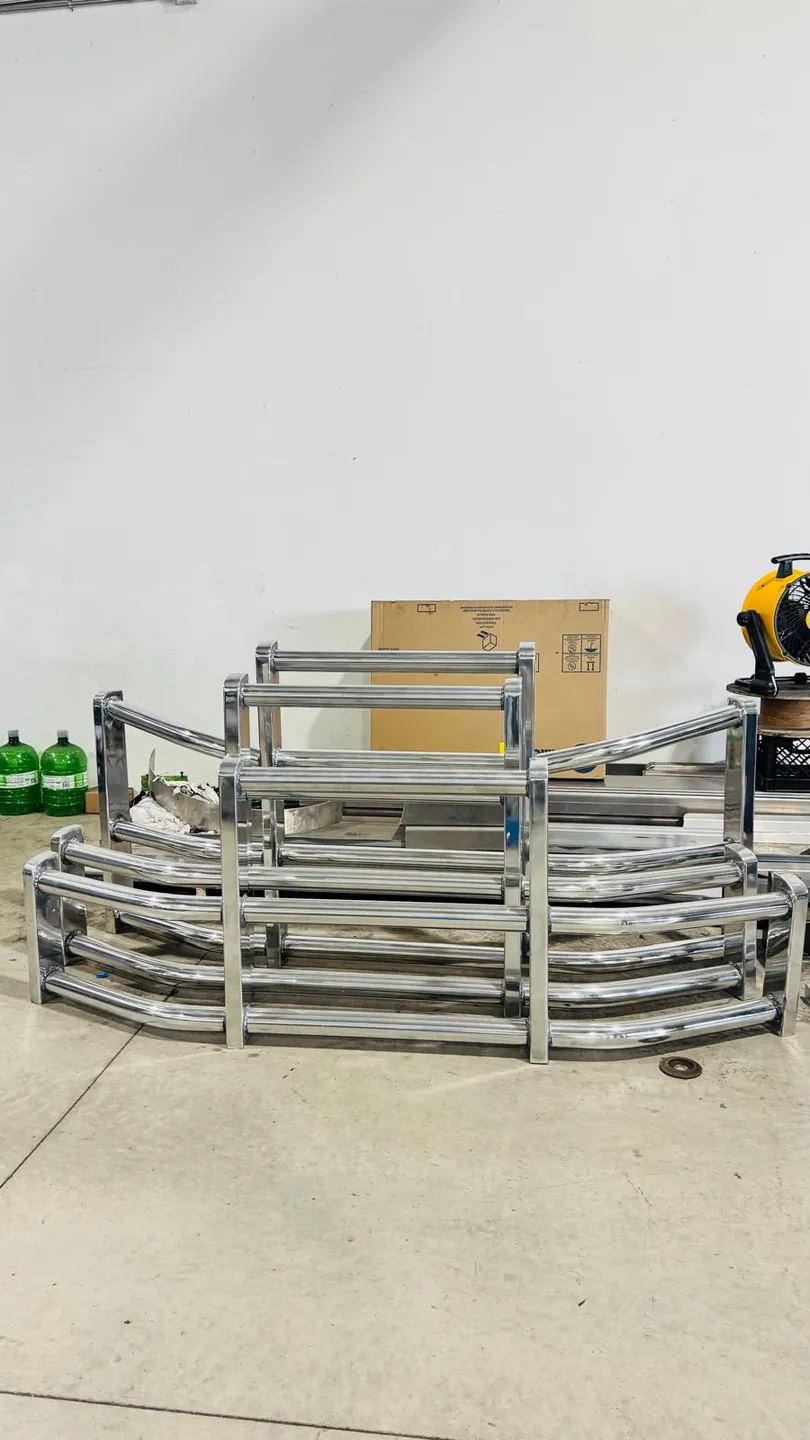
What a good mount looks like
When a deer guard fails in a hit, it is often the mounting that fails, not the tubes. Look for welded gussets at the joints, brackets that bolt into frame points, and clean welds with no undercut or pinholes. Ask where the guard transfers load and how it will be inspected afterwards. A well-built guard should bend at the tubes, not rip off its brackets.
If your guard has already been hit
- Look for hidden damage. A bent tube is obvious. Cracked welds, torn brackets and elongated bolt holes are not.
- Check what is behind it: the radiator, charge air cooler, hoses, wiring and the hood hinges.
- Do not keep driving on a loose guard. One that swings or rattles can come off on the highway.
- Decide repair or replace. A lightly bent guard in sound steel can often be straightened and re-welded. A kinked, creased or repeatedly bent tube, or torn mounts, usually means replacing parts or the whole guard.
We straighten and re-weld damaged guards and bumpers and replace broken mounts. Send photos from the front and from the side.
New guard, bumper or repair: what we do
Our truck deer guards and custom bumpers page lists the versions we build. We also fabricate steps, toolboxes, generator boxes and carriers on our welding and fabrication page, and we repair trailer-side bumpers too: see our ICC bumper repair guide. A repair on an existing guard can often be done at your yard by our mobile welding truck. A new custom build is done in our Brampton shop.
Where we work and how to get a quote
Send your truck make, model and year, plus photos of the front end, to WhatsApp 437-985-7311. We confirm fitment and give you a price and timeline before we start. We serve Brampton, Mississauga, Toronto, Vaughan, Milton, Oakville and Caledon, 7 AM to 7 PM, seven days a week, with no overnight service.
Call 437-985-7311 WhatsApp photos
Frequently asked questions
Is a deer guard required on a truck in Ontario?
We are not aware of any rule that makes a deer guard mandatory. It is an optional protection you add yourself. Because a front-end change can matter to your insurer and to inspections, check with your insurance provider and the current MTO rules before you fit one.
What is the difference between a standard and a heavy-duty deer guard?
A standard guard protects the grille, radiator and headlights from animal strikes and road debris while keeping weight down. A heavy-duty build uses thicker material and extra bracing, and suits drivers running long-haul and northern routes where wildlife hits are more common.
Can you repair a deer guard that has been hit?
Yes. We straighten and re-weld damaged guards and bumpers and replace broken mounts. A guard that has taken a hit can be bent in ways that are hard to see, so we also look at the frame mounts it was attached to.
Which trucks can you build a deer guard for?
We build for common highway tractors. Send your truck make, model and year and we confirm fitment before we build anything.
How long does a custom deer guard take, and what does it cost?
Build time depends on the design and our schedule, and the price depends on your truck and the version you choose. We do not guess from a description: call 437-985-7311 with your truck details and we give you a timeline and price before we start.
Does a deer guard get in the way of pre-trip inspections or radar sensors?
It can if it is badly designed. Tell us if your truck has forward radar or a collision-mitigation system, and what you need to reach for pre-trip checks, so the design leaves room for both.
Related guides
More Baaz Welding guides · Truck deer guards & bumpers · Flatbed headache rack repair