Step 1: Get safe before you think about the repair
- Get as far onto the shoulder as you safely can. A wide shoulder or a ramp is better than a narrow one beside a barrier wall.
- Turn on your hazard lights and, if it is safe to get out, set out reflective triangles.
- Stay clear of the traffic lane. Wait away from the unit, not between it and the road.
- Call 911 if anyone is hurt, the unit is blocking a lane or it feels unsafe to stay.
Nothing below is worth standing in traffic for. A photo can wait ten minutes. You cannot.
Step 2: Work out what kind of failure it is
Most roadside advice online stops at flat tires, bulbs and fuses. Those are real, but a lot of GTA breakdowns are structural: something cracked, bent or came loose. Broadly there are three groups:
- Tires, brakes, air and electrical. A mechanic or tire truck handles these. A welder is not the right call.
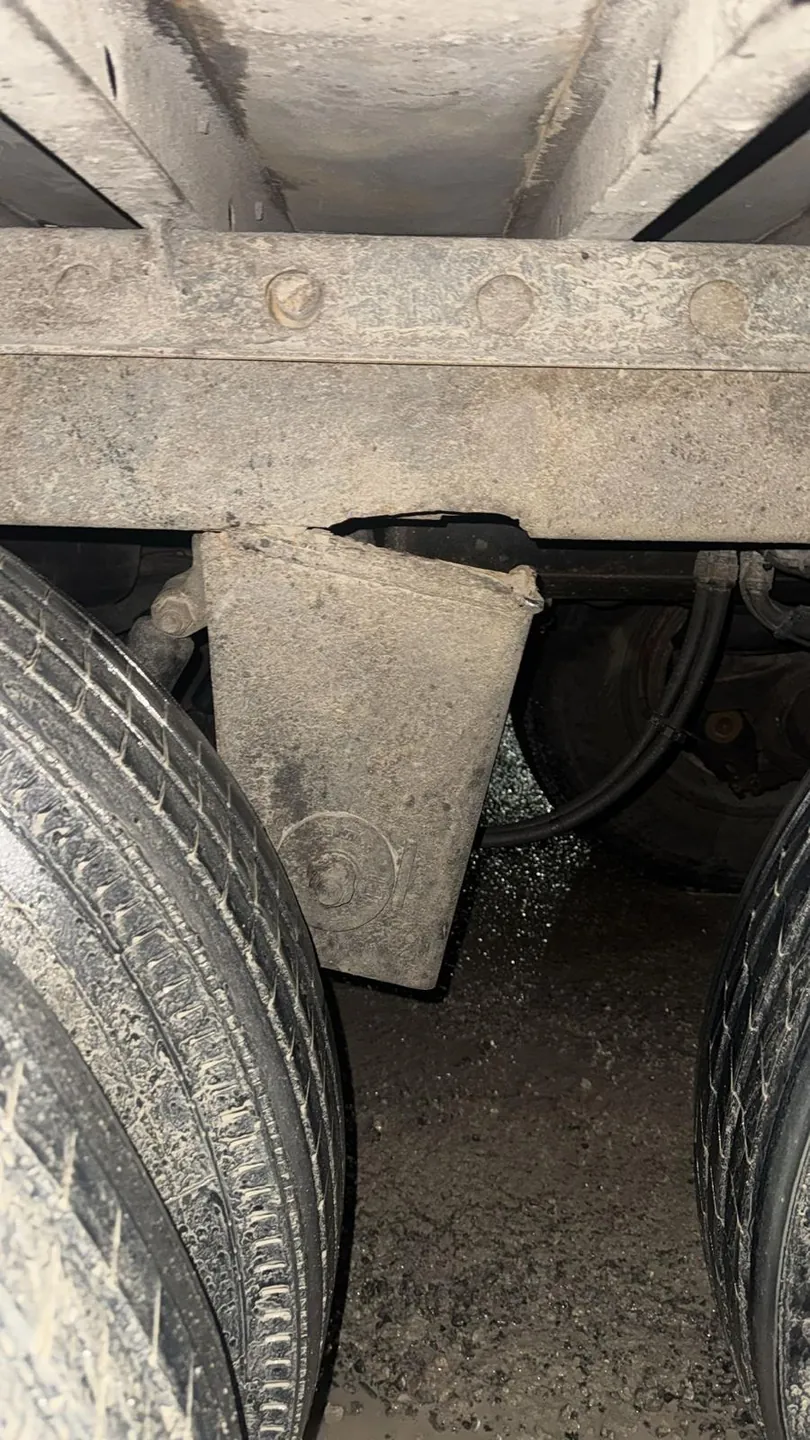
- Structural damage. Cracked cross members or frame brackets, a broken suspension hanger, a collapsed landing gear leg, a torn side panel, a split roof bow or a door that no longer latches. This is welding and fabrication work.
- Impact damage. Dock strikes, jackknife contact or a hit from another vehicle. It may be both structural and cosmetic.
Step 3: Decide whether it can be moved
This is the part most guides skip, and it decides whether you pay for a short tow or a much larger repair later.
- Leave it where it is if a suspension hanger, axle mount, kingpin plate area or main frame member is cracked, or a wheel is out of line. Driving on it can turn a one-part repair into a frame repair.
- Short, slow move may be fine for a split side panel, a broken door latch or a damaged bumper, if it is empty and nothing hangs into the road or the tires.
- Do not move it loaded when the damage is in anything that carries weight. If you are not sure, treat it as load-bearing.
When you are unsure, ask before you drive. Look at the damage with a flashlight if you must, but do not crawl under a unit parked beside traffic.
Step 4: Take the photos a repairer actually needs
Photos save a trip and often decide whether the job is a mobile repair at all. Take these three, from a safe position:
- A wide shot of the whole damaged area and enough of the trailer to see where it is.
- A close-up of the break or damage from straight on, not at an angle.
- A shot of what it connects to, such as the frame rail, the hanger, the floor or the door frame.
Then send them on WhatsApp 437-985-7311 with the trailer type, whether it is loaded and where it is parked. That is the same information we ask for first, so it saves a round of questions.
Step 5: Tell your dispatcher or insurer the right things
- Exact location: highway, direction, nearest exit or yard address.
- Unit type: dry van, reefer, flatbed, box truck, and whether it is aluminum or steel.
- What failed, in plain words, and when you noticed it.
- Loaded or empty, and whether the load is time-sensitive.
- Whether the unit can be moved and where it will be sitting tonight.
Keep your photos and notes. They help if the repair goes through insurance or a fleet claim.
What a mobile welder can fix once you are somewhere safe
Once the unit is in a yard, lot or at a dock, a welding truck can reach it without towing. These are the repairs we do most:
- Cracked cross members and floor supports
- Suspension hangers and brackets
- Landing gear legs, mounts and braces
- Roof and side panels, including roof bows and headers
- Rear doors, hinges and latches
- ICC bumpers and underride guards
Hours: be honest with yourself about timing
We work 7 AM to 7 PM, seven days a week, and we do not offer overnight service. If a unit breaks at 9 PM, the best use of the night is to get it safe, send photos, and plan for the first morning slot. Call-outs are usually within 24 hours. A tow to a safe yard is a fair cost when the alternative is leaving a unit on a shoulder or driving it damaged.
What to do before the repair visit
- Park the unit on flat, firm ground with space around the damaged area.
- Unload it if you can. It makes access easier and reduces risk.
- Keep fuel, paint thinner and loose cargo away from the area to be welded.
- Tell us what the trailer hauled if the damaged part is a tank or box.
We cover Brampton, Mississauga, Toronto, Vaughan, Milton, Oakville and Caledon. See our mobile trailer welding service for how a call-out works.
Call 437-985-7311 WhatsApp photos
Frequently asked questions
Can you weld my trailer on the side of the highway?
Not as a rule. Our service hours are 7 AM to 7 PM, seven days a week, with no overnight service, and welding beside live traffic is rarely safe. The usual plan is to get the unit to a safe yard, lot or dock, then we bring the welding truck to it. If you are unsure, call 437-985-7311 and we will tell you honestly what is possible.
What should I do first if my trailer breaks on a 400-series highway?
Get everyone safe first. Move as far onto the shoulder as you can, turn on hazards, stay out of the traffic lane and call 911 if anyone is in danger or the unit is blocking traffic. Repair questions come after that.
How fast can you come?
Call-outs are usually within 24 hours, between 7 AM and 7 PM. We do not promise a response time before we know the job. Call or send photos and we will give you the earliest slot.
What photos help most?
One wide photo showing the whole damaged area and the trailer, one close-up of the break from straight on, and one showing what it connects to, for example the frame rail, the hanger or the floor. Add a short line on whether it is loaded.
Will my trailer pass inspection after a welding repair?
Our welds are done to pass MTO annual safety and CVSA roadside inspections. Whether a particular part can be repaired at all is decided after we see it.
Do you work with fleets?
Yes. Several units can be done in one yard visit, with an itemized invoice per unit sent by email.
How much does a breakdown repair cost?
It depends on the part, the damage and the access, so we do not guess from a description. Send photos on WhatsApp to 437-985-7311 and we quote before we start.
Related guides
More Baaz Welding guides · Cracked trailer cross member · Landing gear repair