Step 1: Work out what was actually hit
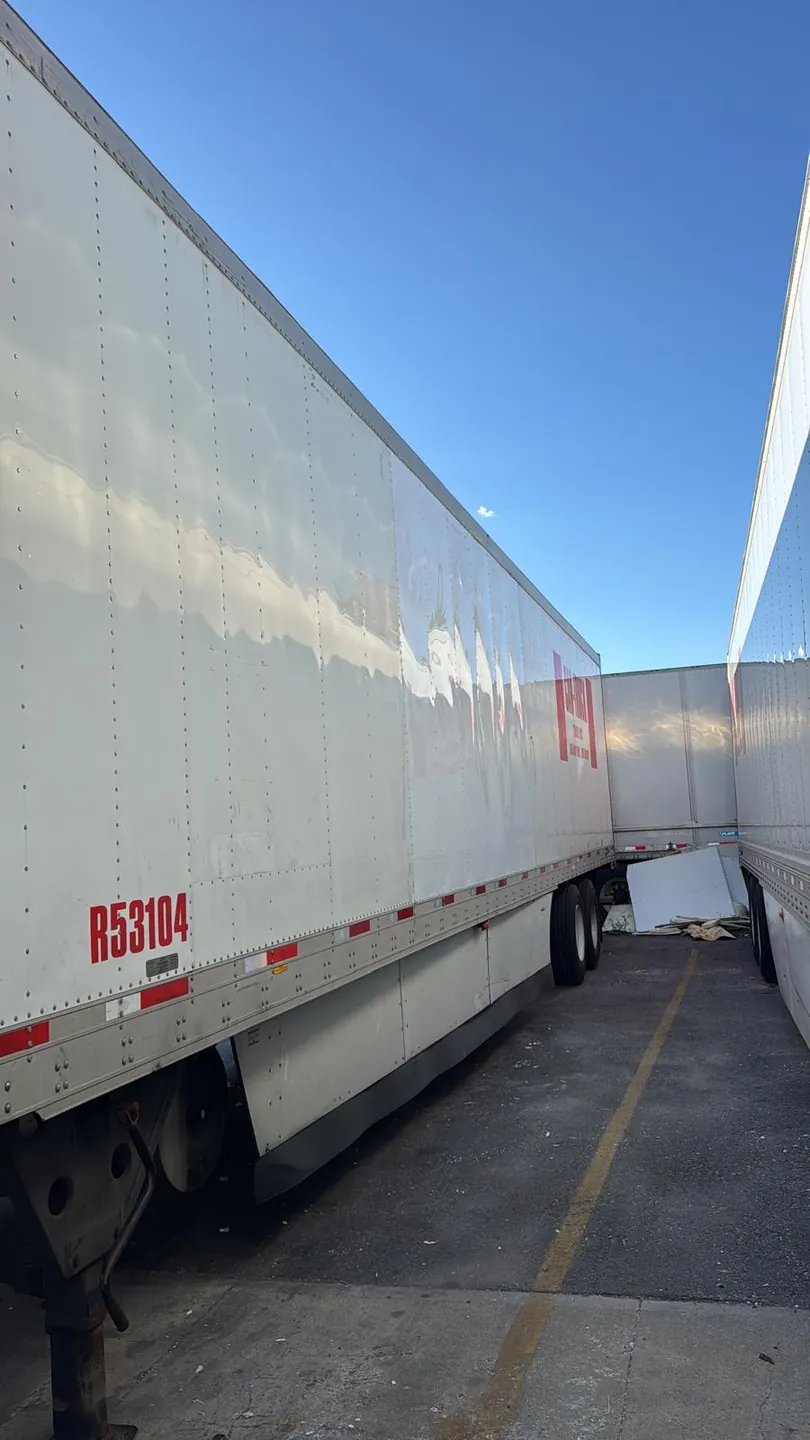
The skin is the part you can see. The structure behind it is the part that matters. A side wall is skin riveted or bonded to vertical posts, with a top rail, a bottom rail and (on the roof side) bows tying it together. A hit hard enough to tear the skin can also push a post out of line, crack a rail weld or twist the rear frame.
Before you decide anything, walk it through these checks, preferably empty:
- Look from inside. A dent that is sharp on the outside and has a kinked post on the inside is a different job from a clean puncture.
- Sight along the wall. Crouch at the front corner and look down the length. Waves, a bulge or a lean point to bent posts.
- Check the seams and rails. Look for cracked welds or popped rivets at the top and bottom rail, and at the post connections near the damage.
- Check the doors. Does the rear door still close and latch? A wall pushed out of square often shows up at the doors first. See our guide on doors that will not close.
- Check the floor and cross members near the damage if a forklift or load went through it; see cracked cross members.
Step 2: Your three options
Option A: Tape (temporary only)
Foil or aluminum tape over a small hole keeps rain and spray out. It is a stopgap: it adds no strength and it will peel. If you use it, treat it as a reminder to book the real repair, not as the repair.
Option B: A patch
For a puncture or a short tear in skin that is otherwise sound, a patch is the usual answer. The damaged section is trimmed back to clean, solid metal and a patch is fitted over or into the opening. Good patch practice, whichever method is used:
- Make the patch comfortably larger than the damage, with square or rectangular edges rather than a shape that copies the hole.
- Flatten any ragged edges first so nobody is cut loading the trailer.
- Match the metal. Mixing different metals in a wet, salted environment invites corrosion at the joint, which is why aluminum skin gets aluminum fasteners and patch material.
- Seal the perimeter so water cannot get behind the skin and rot the posts and insulation from inside.
Where the material allows it, we weld the patch or the new section in rather than relying on sealant alone, because a welded repair carries load and does not work loose. Thin aluminum skin has to be judged case by case, and we say so if we think a section should be replaced instead.
Option C: Replace the panel or a section
Replacement makes sense when the wall is crushed across a large area, when the skin is thin and corroded all around the damage, or when several patches already sit close together. It is more labour than a patch because the old section has to come off cleanly and the new one has to line up with the posts, rails and neighbouring panels. Replacing a section rather than the whole wall is often the practical middle road.
| Damage | Usually |
|---|---|
| Small puncture, sound skin around it | Patch |
| Short tear, posts straight | Weld or patch |
| Tear along a post or rail, popped rivets | Repair structure first, then skin |
| Crushed or buckled over a large area | Replace section |
| Corroded thin skin all around the hole | Replace section |
Step 3: Is the trailer worth repairing?
Most side wall damage is worth fixing, because the skin and posts are a fraction of what a replacement trailer costs. The case for stopping and rethinking is when the wall damage comes with a twisted frame, a rotted floor and a failing door all at once. Some shops use a rule of thumb that repairs above roughly 40% of the trailer's current value are a warning sign. That is a general guideline, not a rule, and your situation (age, how it is used, your inspection history) matters more. We would rather tell you honestly that a unit is not worth the money than quote you a job that does not make sense.
What most guides leave out
- Squareness. Many repair write-ups talk only about the hole. A trailer pushed out of square wears tires unevenly, strains the doors and can fail an inspection no matter how good the patch looks. We check this before we close up a wall.
- Water behind the skin. A hole that has been open through a few rainy weeks may have soaked the insulation and started rust in the posts. We look behind the skin, not just at it.
- Cause. If a load keeps shifting into the wall, or tie-downs are anchored to the wall, the next repair is already booked. Load bars, blocking and proper tie-down points protect the walls better than any patch.
What to send us for a quote
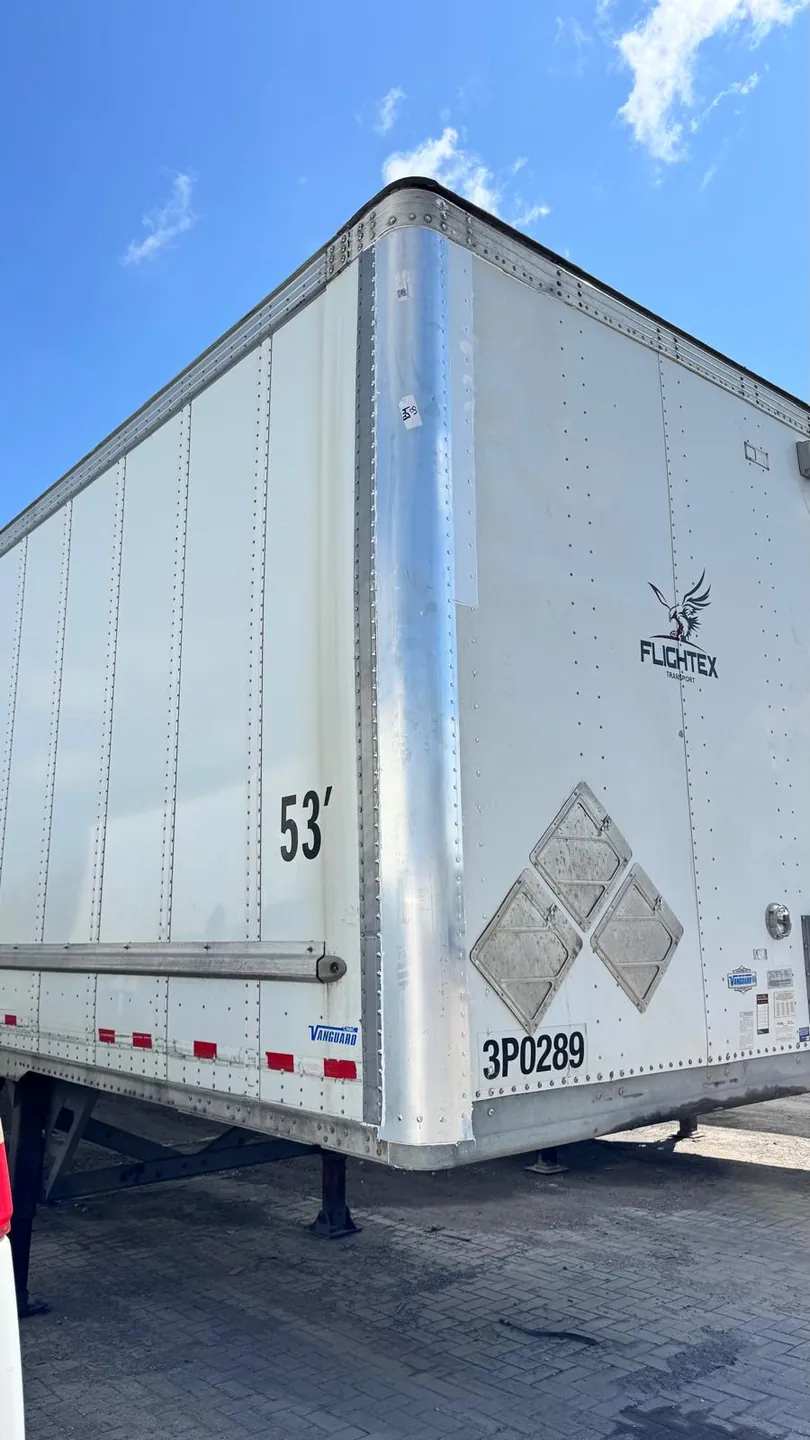
Text or WhatsApp 437-985-7311 with: one wide shot of the whole side, one close-up of the damage, one from inside if you can reach it, and the trailer type (dry van, reefer, box body) and material if you know it. We quote before we start, from the photos, and send an itemized invoice afterwards. If you have several units with damage, we can do them in one visit. Our welding truck covers Brampton, Mississauga, Toronto, Vaughan and Milton, 7 AM to 7 PM, seven days a week.
Read more about the work on our trailer roof and side panel repair page, our aluminum trailer welding service and general trailer welding and fabrication. For the on-site service itself, see mobile trailer welding.
Call 437-985-7311 WhatsApp photos
Frequently asked questions
Can I drive with a hole in my trailer side wall?
A small puncture in an empty trailer is usually a rain and cargo-protection problem, not a structural one. But a hole is often only the visible part of the damage, so check the posts and the squareness before you load. A tear that runs along a seam or post, or a wall that is bulging, should be looked at before it hauls freight.
Is foil tape a real repair?
No. Tape keeps rain and road spray out for a short time on a small hole, and that is all. It does not restore strength and it peels. Treat it as something that gets you to a proper repair, and schedule that repair soon.
Should the side panel be patched or fully replaced?
A puncture or short tear in sound skin is normally a patch. A wall crushed across a large area, or skin that is thin and corroded all around the damage, is better replaced in sections. We look at the damage and tell you which makes more sense before we quote.
Can you repair aluminum side walls?
Yes, we weld aluminum and steel on the truck. Thin aluminum skin needs careful heat control, so we judge each repair on its own and tell you honestly if a section is better replaced than welded.
How much does a trailer side panel repair cost?
It depends on the size of the damage, the material, and whether posts or roof bows behind the skin are also bent. We do not guess prices from a description. Text photos to 437-985-7311 and we quote before any work starts.
Can the repair be done at my yard?
In most cases yes. Our welding truck comes to your yard or dock in Brampton, Mississauga, Toronto, Vaughan and Milton, 7 AM to 7 PM, seven days a week. Large wall rebuilds are sometimes better done in our yard.
Related guides
More Baaz Welding guides · Cracked trailer cross member · Landing gear repair