Start with three measurements
- Deck height: ground to the top of the deck where the ramp will rest, measured with the trailer or truck loaded as it normally sits.
- Heaviest single load: the actual weight of the machine, including attachments and fuel, not the brochure number.
- Widest track or tire: the ramp needs to be wider than this with room on each side.
Length: gentler is safer
The ramp guides we read from ramp sellers agree on one thing: a longer ramp makes a gentler slope, and a gentler slope is safer. A common rule of thumb is a ramp at least three times as long as the deck is high; some suppliers use a more conservative rule for heavy or low-clearance machines. Low machines with short wheelbases, like skid steers on tracks or low equipment with little ground clearance, may need a longer ramp or a curved or hinged transition at the top.
Capacity: size for the heaviest load, with a margin
Pick a rating above your heaviest machine, because driving or rolling on adds stress that a static weight does not show. Published guides suggest a margin of around 20 to 30 percent. Check whether a quoted capacity is per ramp or per pair, and remember a machine's weight is not shared evenly while it is climbing. For a custom ramp, the capacity depends on the steel, the thickness and how the rails and cross bracing are built, so tell your fabricator the load rather than asking for a generic ramp.
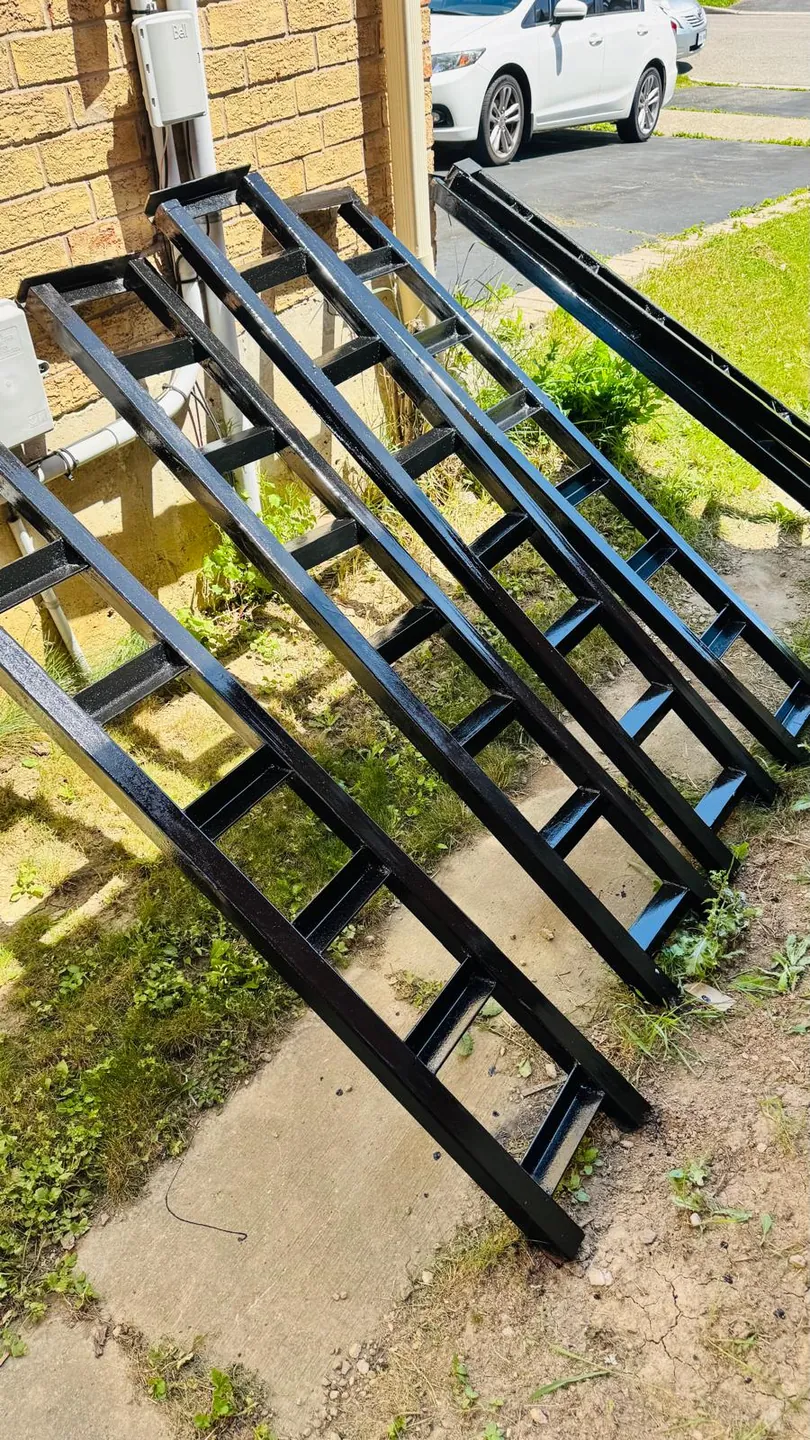
What the buying guides tend to skip
Most ramp guides are written by sellers of ready-made ramps and focus on length tables and ratings. The parts that matter on a working flatbed or truck are less often covered:
- How the ramp attaches to the deck. A ramp that can slide or kick off the edge is the real hazard. Hooks, pins or a lip that locks over the deck edge should be part of the design.
- The top transition. A sharp step where the ramp meets the deck can bottom out low machines or jolt heavy ones. A bevelled or hinged lip helps.
- Grip. Smooth steel gets slick with frost, rain or mud, and an Ontario winter makes this a daily issue. Traction surfaces and raised edges matter.
- Welds and fatigue. Ramps flex every time they are used. How the rails, cross members and hooks are welded decides whether they last.
- Storage on the truck or trailer. Where do the ramps ride when not in use, and how are they secured? A good design plans for this.
What to tell a fabricator
- The machine or machines you load, and the weight of the heaviest.
- Deck height and the type of deck (flatbed, straight truck, RGN, dump body).
- Overall width you need and the track or tire width.
- How you want to attach them, and how you want to carry them.
- Whether you load on gravel or soft ground, or on a paved yard.
Our work includes loading ramps along with other flatbed and trailer fabrication. We build to the job in our shop, then you can fit and test them on your own deck.
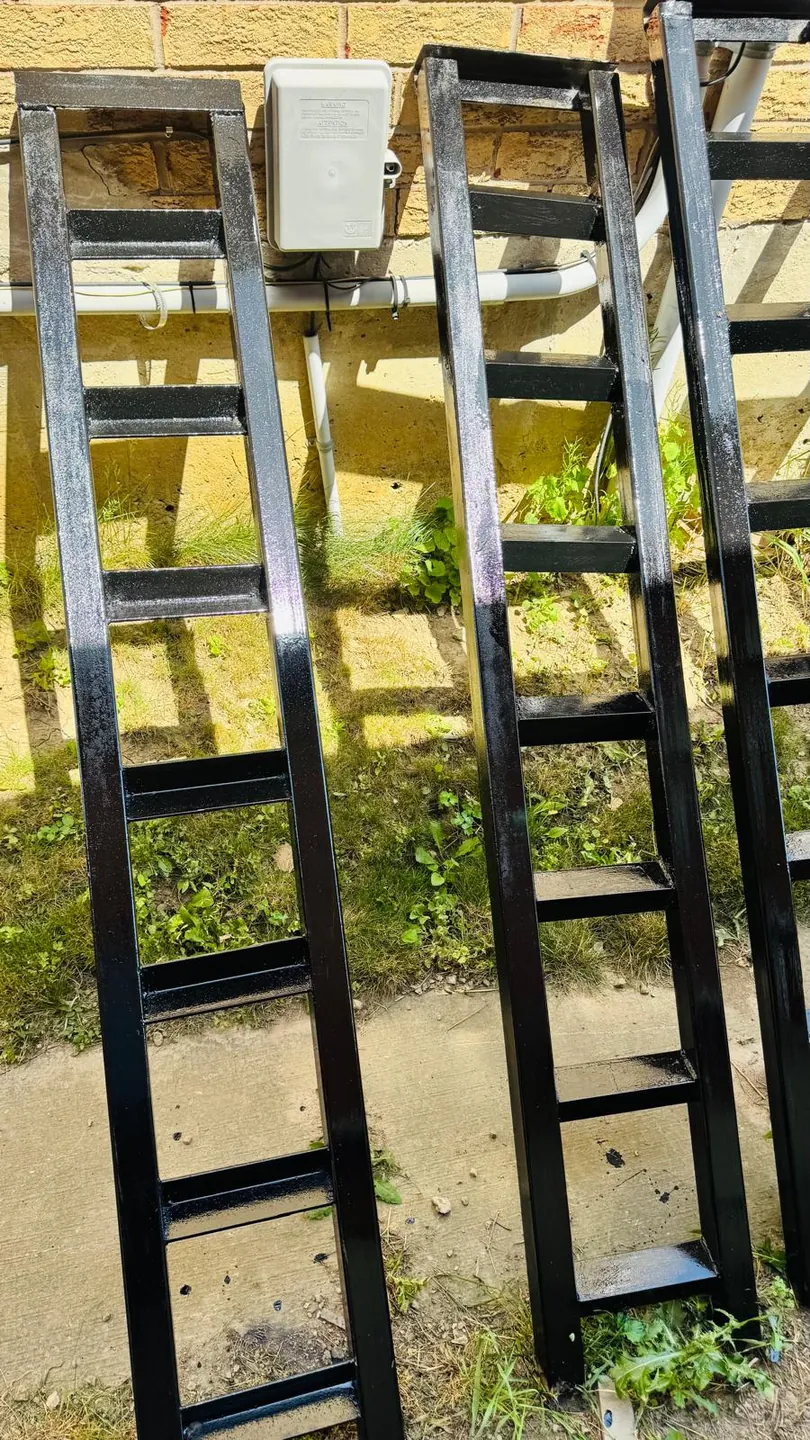
Inspect the ramps you already have
Look at your ramps before each use and more closely every few months. Check:
- Cracks at welds, especially where hooks meet the rails and where cross members meet the rails.
- Bent rails or twisted frames from a drop or an overloaded climb.
- Worn or bent hooks and lips that no longer lock over the deck edge.
- Rust that has thinned the steel, especially on the underside, where road salt collects. Our winter salt corrosion checklist applies to ramps too.
- Worn traction surfaces that are now smooth.
If a ramp is damaged, stop using it. A cracked weld that holds today can fail under a heavy machine tomorrow.
Repair or replace a damaged ramp?
- Cracked weld in sound steel: grind out the crack, re-weld and add reinforcement. This is the same approach we use on cracked cross members.
- Bent rail: sometimes it can be straightened; if it has been bent before, or is kinked, replace that section.
- Worn hooks or lips: cut off and replace with new steel.
- Rusted thin: replace. Welding onto thin metal does not hold.
Mobile repairs happen at your yard: see mobile trailer welding. Bigger ramp rebuilds are best done in the shop. Related deck work is covered in our flatbed deck repair guide.
Safe use, in short
- Park on level, firm ground and chock the wheels.
- Secure the ramps to the deck before the machine moves.
- Line up the ramps with the machine's tracks or tires and go slowly.
- Use a spotter for heavy or tall machines.
- Never exceed the rated load, and never load with someone standing beside or below the ramp.
Steel or aluminum?
Ramp guides generally say aluminum is lighter and does not rust, while steel is heavier, stiffer and suits high-capacity, regularly used ramps. That matches what we see. Heavy tracked machines and daily yard use usually favour steel; if someone has to lift the ramp by hand every day, weight becomes the deciding factor. We weld both steel and aluminum, so tell us how the ramps will be handled and stored and we will suggest a build. See also our aluminum trailer welding page.
Common mistakes we would warn you about
- Buying by the pair rating alone without checking the weight on the heavier side while climbing.
- Skipping the attachment. Ramps that only rest on the deck edge can walk off under a moving machine.
- Ignoring the slope on soft ground. If the bottom end sinks, the angle gets steeper than you planned.
- Using a damaged ramp "one more time". Cracks and kinks only get worse.
- Leaving ramps outside all winter without checking the underside for salt damage.
Where we work and how to get a quote
Send a photo of the deck, the deck height and what you load to WhatsApp 437-985-7311. We give a quote before any work starts. Our shop is at 115 Orenda Rd in Brampton, and we serve Mississauga, Toronto, Vaughan, Milton, Oakville and Caledon, 7 AM to 7 PM, seven days a week, with no overnight service.
Call 437-985-7311 WhatsApp photos
Frequently asked questions
How long should my loading ramps be?
Measure the height from the ground to your deck and choose a length that gives a gentle slope. A common rule of thumb in published ramp guides is a length of at least three times the deck height, and a longer ramp is easier and safer for low or heavy machines. Tell us the deck height and what you are loading and we will suggest a length.
How do I know what capacity I need?
Start from the real weight of the heaviest single machine you will load, including attachments and fuel, then add a safety margin because driving on adds stress. Also check whether a rating is per ramp or per pair. A fabricator should be able to build to your load, so give us the machine weights.
Can you build ramps to fit my flatbed or truck deck?
Yes, we build heavy steel loading ramps to order, along with other flatbed fabrication such as headache racks and e-track. Send the deck height, the machine you load and a photo of where the ramps will sit.
Can you repair bent or cracked loading ramps?
Often yes. Cracked welds, bent rails and worn lips can usually be straightened, re-welded and reinforced. If the steel is rusted thin or bent more than once, replacing that part or the ramp is safer. Send photos and we will tell you which.
How much do custom loading ramps cost?
It depends on length, width, capacity and the design, so we do not guess a price. Send the details and photos to WhatsApp 437-985-7311 and you get a quote before any work starts.
Do you build ramps on-site or in your shop?
New ramps are normally built in our Brampton shop at 115 Orenda Rd. Repairs to ramps still attached to a trailer can often be done at your yard by our mobile welding truck, 7 AM to 7 PM, seven days a week.
Related guides
More Baaz Welding guides · Cracked trailer cross member · Landing gear repair