Why frames crack
Steel and aluminum both fatigue. Each bump and load cycle flexes the metal a tiny amount, and over time a crack starts where stress is concentrated: a sharp corner, the edge of a weld, a hole or a spot where thick metal meets thin. Rust makes it worse by thinning the steel, so the same load is carried by less metal. In the GTA, winter road salt speeds this up, which is why we also wrote a road salt corrosion checklist.
The usual crack locations
- Weld toes. The edge of a weld, where the weld meets the base metal, is the most common starting point.
- Corners of cut-outs, holes and slots. Sharp corners concentrate stress, and cracks often radiate out from them.
- Ends of gussets, doublers and plates. Where added metal stops, the load suddenly moves back into the thinner part.
- Suspension hangers and slider rails. These carry the axle loads. See our guide to cracked suspension hangers.
- Cross member to rail joints. A cracked or rusted cross member lets the floor sag. See cracked cross members.
- Landing gear mounts and braces. Bent legs and cracked brackets are covered in our landing gear guide.
- Kingpin plate and upper coupler area. A crack here is serious. Get it looked at before the trailer is hooked and loaded.
- Rear frame and ICC bumper mounts. Dock hits crack the welds. See ICC bumper repair.
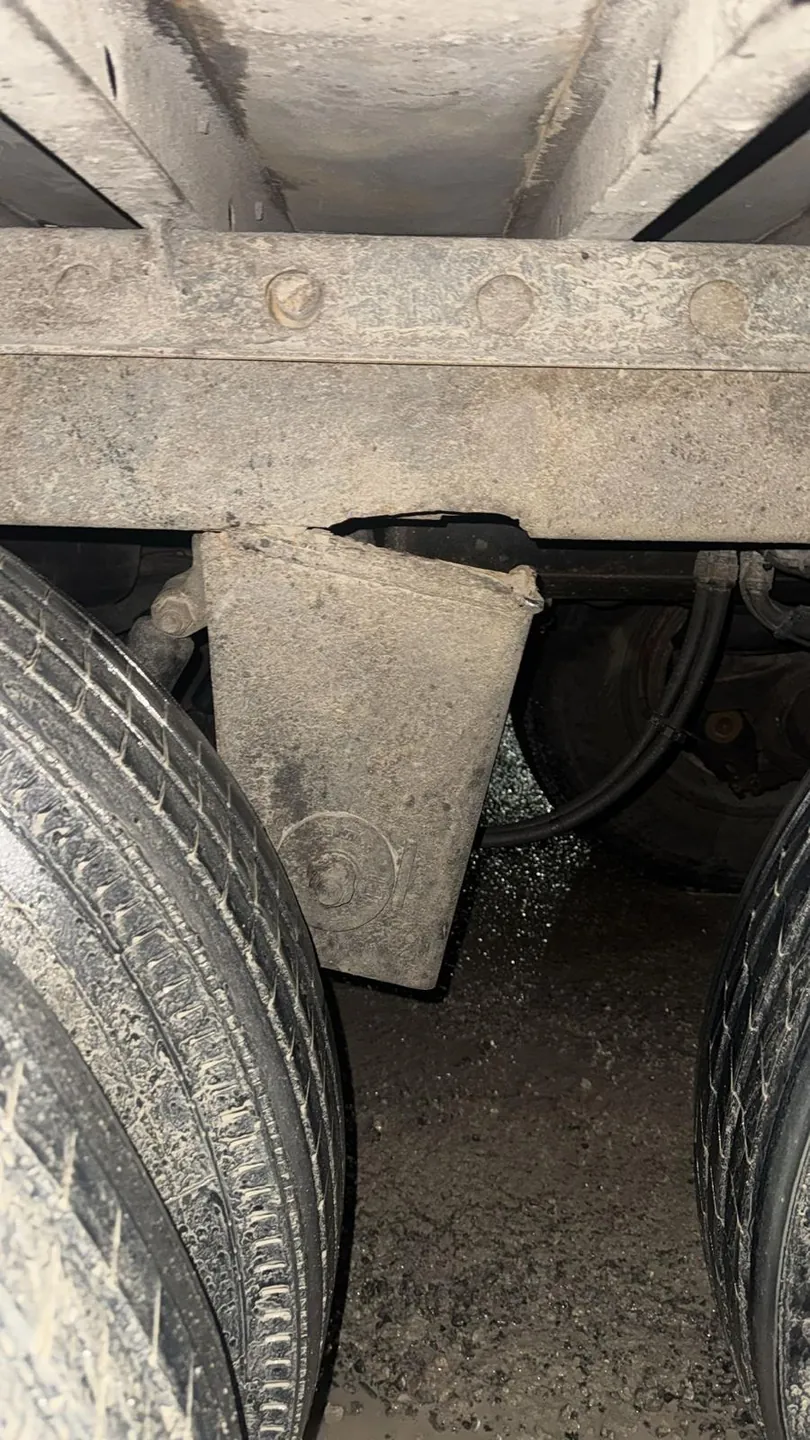
How to recognise a crack
- Rust lines. A thin line of rust bleeding out of a weld or corner often means the metal is moving there.
- Cracked paint or undercoating. A straight line through paint on a weld is worth a closer look.
- Clean, bright metal beside a dark line, or fine dust where parts rub, means movement.
- Loose or elongated bolt holes and bolts that keep backing off.
- Sagging or uneven floor or a door that no longer lines up.
Wipe the area, give it a light wire brush and look with a flashlight held at a low angle. Shadows make a hairline crack easier to see. If you are unsure, take a photo.
A 10-minute checklist
- Walk the front. Kingpin plate and surrounding structure, front wall bottom corners, landing gear legs, mounts and cross brace.
- Go under the middle. Look along each cross member where it meets the rails, and along the floor supports for rust or cracked welds.
- Check the suspension. Hanger welds, slider rails and pin holes, bolts and bushings.
- Check the rear. ICC bumper welds and mounts, rear sill, door hinges and frame around the doors.
- Look at the sides and roof for cracked roof bows, torn skins and rust at the bottom rail.
- Mark and photograph. Use a paint marker to put a small tick at each end of any crack, and take a close-up and a wide photo with the date.
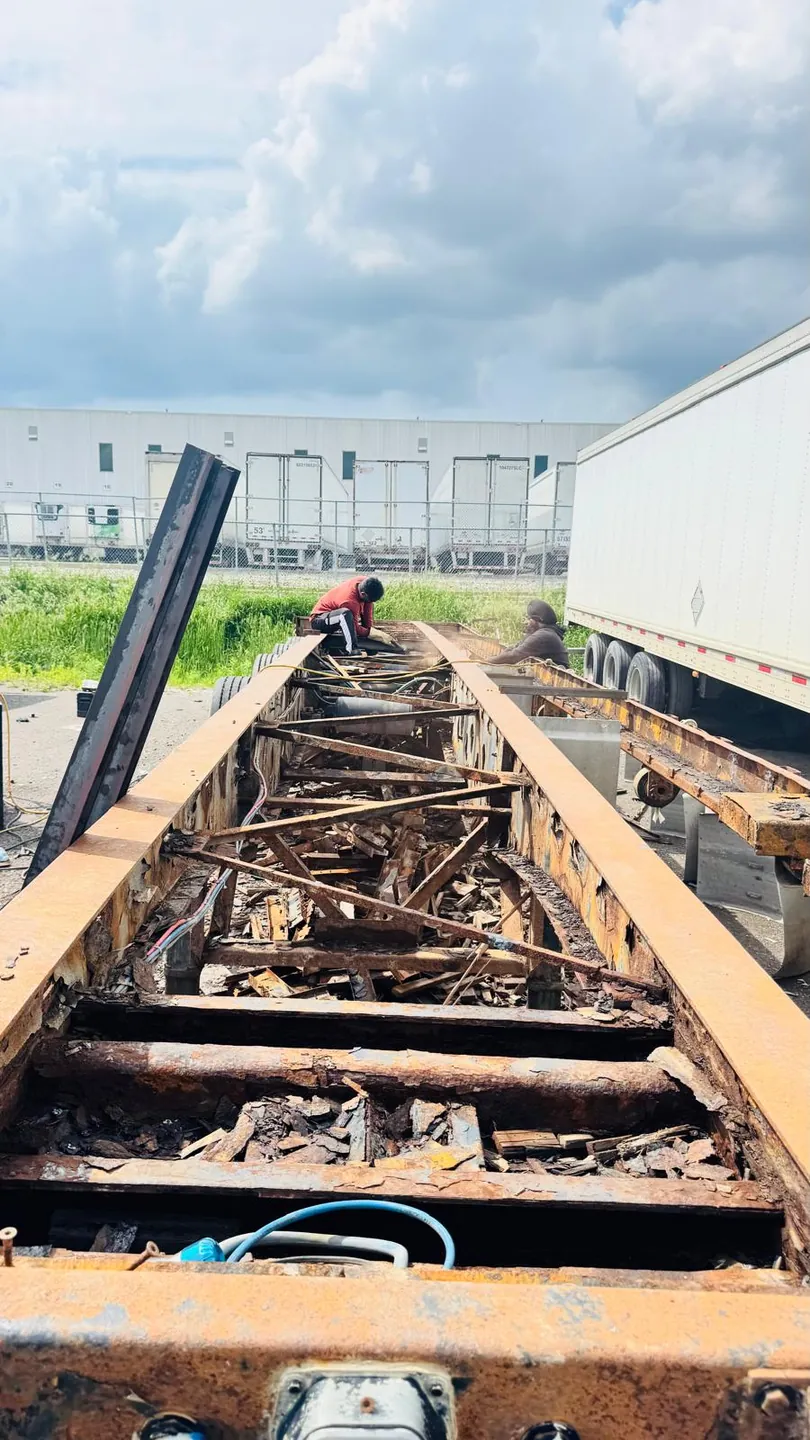
Pre-trip, annual inspection and your own regular check
In Ontario, commercial vehicle operators have daily inspection duties and commercial vehicles are subject to periodic safety inspections. The exact rules depend on the vehicle and its weight, so confirm what applies to your unit with the Ministry of Transportation or your inspection station. A driver's pre-trip is a quick walk-around and will not find everything. A scheduled look underneath, for example in the fall before salt season and in the spring after, finds cracks while they are still small and cheap to fix.
What to do when you find a crack
- Mark the ends and photograph it. This lets you see whether it is growing.
- Do not ignore a crack at the suspension, kingpin or landing gear. Get it assessed before the next loaded trip.
- Do not drill, grind or paint over it yourself unless a welder tells you to. Welding over a crack without grinding it out usually fails again.
- Send photos to a welder for an assessment.
How a proper repair is done
The crack is traced to its end, the metal is ground out to clean material, and the joint is welded with the right process and filler. Where the area was overloaded, we add a gusset or plate to spread the load. Aluminum needs different prep and filler, which we explain in our aluminum crack guide. Many repairs can be done on site by our mobile welding truck. Structural work like cross members, hangers and kingpin areas is part of our trailer welding and fabrication service.
Where we work
We serve Brampton, Mississauga, Toronto, Vaughan, Milton, Oakville and Caledon, 7 AM to 7 PM, seven days a week, with no overnight service.
How to get a quote
Send close-up and wide photos of the crack and the unit type to WhatsApp 437-985-7311. We tell you what the repair involves and give a price before we start.
Call 437-985-7311 WhatsApp photos
Frequently asked questions
Where do trailer frames crack most often?
Mostly at stress points: the toe of a weld, the corners of cut-outs and holes, the ends of gussets and plates, suspension hanger welds, cross member to rail joints, and around the landing gear and kingpin areas. Rust-thinned steel cracks in the same places.
How can I tell a crack from a scratch or paint line?
A crack usually looks like a thin dark line in the metal, often with rust staining or a clean bright edge. Wipe the area with a rag, wire brush lightly and look again with a flashlight from a low angle. If a line continues across a weld or into the base metal, treat it as a crack and have it checked.
Is it safe to keep hauling with a small frame crack?
We cannot judge that without seeing it. Cracks grow under load and vibration, and the location matters more than the length. Suspension, kingpin and landing gear cracks are the most serious. Photograph it, mark the ends and get it assessed before the next loaded trip.
Will a weld repair pass an inspection?
The inspector makes that decision, not the welder. A proper repair, with the crack ground out and the part reinforced where needed, gives the best chance of a clean result, but we do not promise a pass. Ask your inspection station what they require for your unit.
Can you repair a trailer frame crack at my yard?
Often yes. Many cracks in cross members, hangers, brackets and panels can be welded by our mobile truck at your yard in the GTA. Frame sections that are badly rusted or have repeated cracks may need cutting out and replacing.
What should I send to get a repair assessment?
Close-up and wide photos of the crack, the unit type and what the trailer is made of (steel or aluminum). Send them to WhatsApp 437-985-7311. We tell you what the repair involves and give a price before we start.
Related guides
More Baaz Welding guides · Welding & fabrication · Winter salt checklist