The short answer
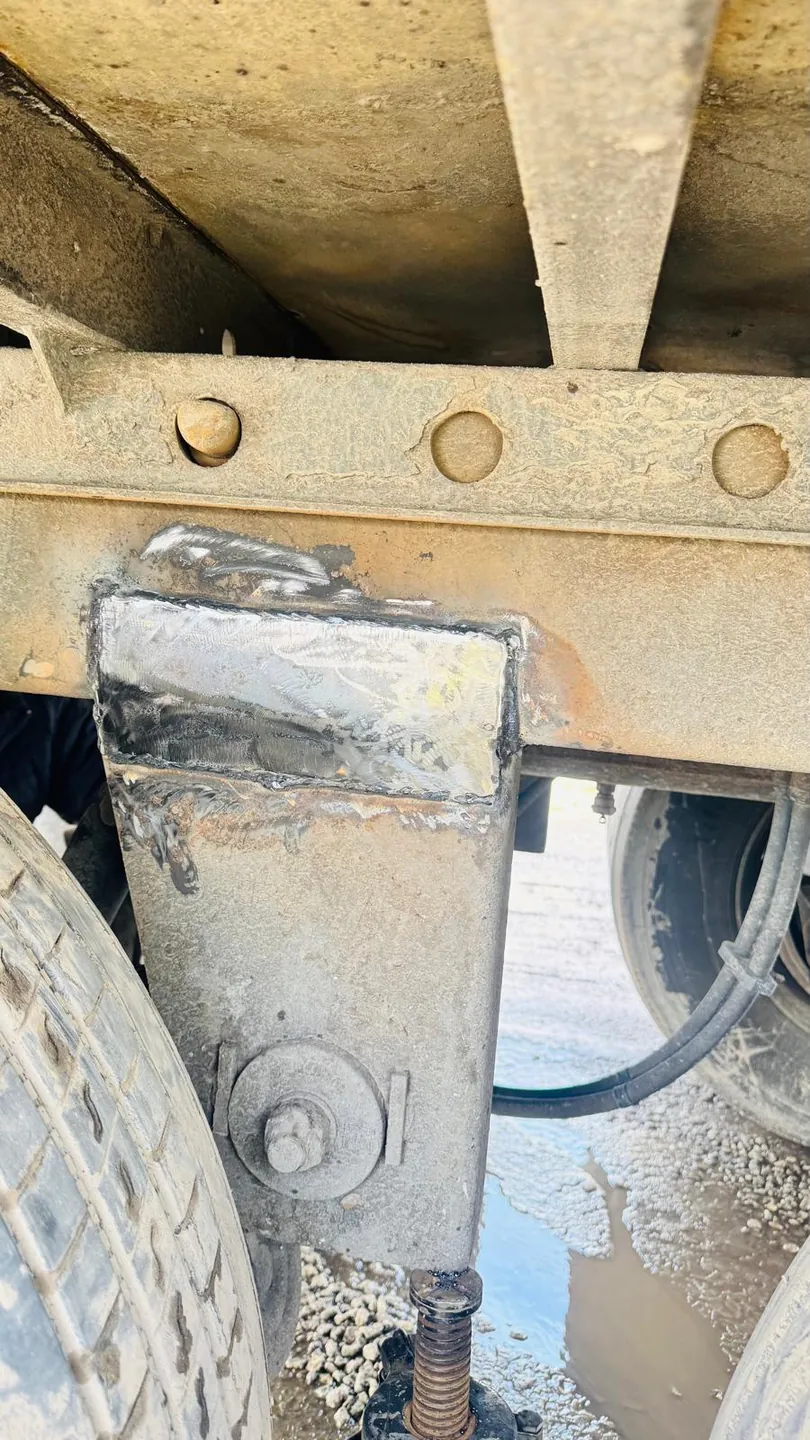
For most common trailer and truck repairs, such as cracked cross members, suspension hangers, brackets, bumpers, doors and panels, a mobile welder can do the job where the unit is parked. A shop is the better choice for large rebuilds, jobs needing a jig or press, or special alloys that need strict heat control. Note that we are a mobile welding company, so we have a stake in this question. We will tell you when a shop is the better choice.
What mobile welding does well
- No tow, no lost day. The trailer stays at your yard, dock or roadside. You skip the tow bill, the wait for a shop bay and the trip back to pick it up.
- Fast assessment from photos. Many jobs can be scoped from a few close-up and wide photos before anyone drives out.
- Repairs on loaded or hard-to-move units. A trailer with a cracked hanger or a failed landing gear leg is risky to move. Repairing it in place avoids that.
- Fleet-friendly. Several units can be fixed in one visit.
What a shop does better
- Big rebuilds. Replacing large sections of floor, frame or body is easier with overhead lifting, a flat floor and a jig.
- Controlled conditions. Shops have stable lighting, no wind and no rain. That matters for special alloys and precision work.
- Machining, pressing and heat treatment. If the part needs these, it belongs in a shop.
- Small parts you can carry in. If the part fits in your truck and the job is not urgent, bringing it to a welder is often cheaper than a service call.
Decision table
- Is the trailer safe to move? If a cracked suspension, kingpin or landing gear area makes towing risky, repair in place.
- Is it earning money this week? If yes, downtime usually decides it. Mobile saves the tow and the wait.
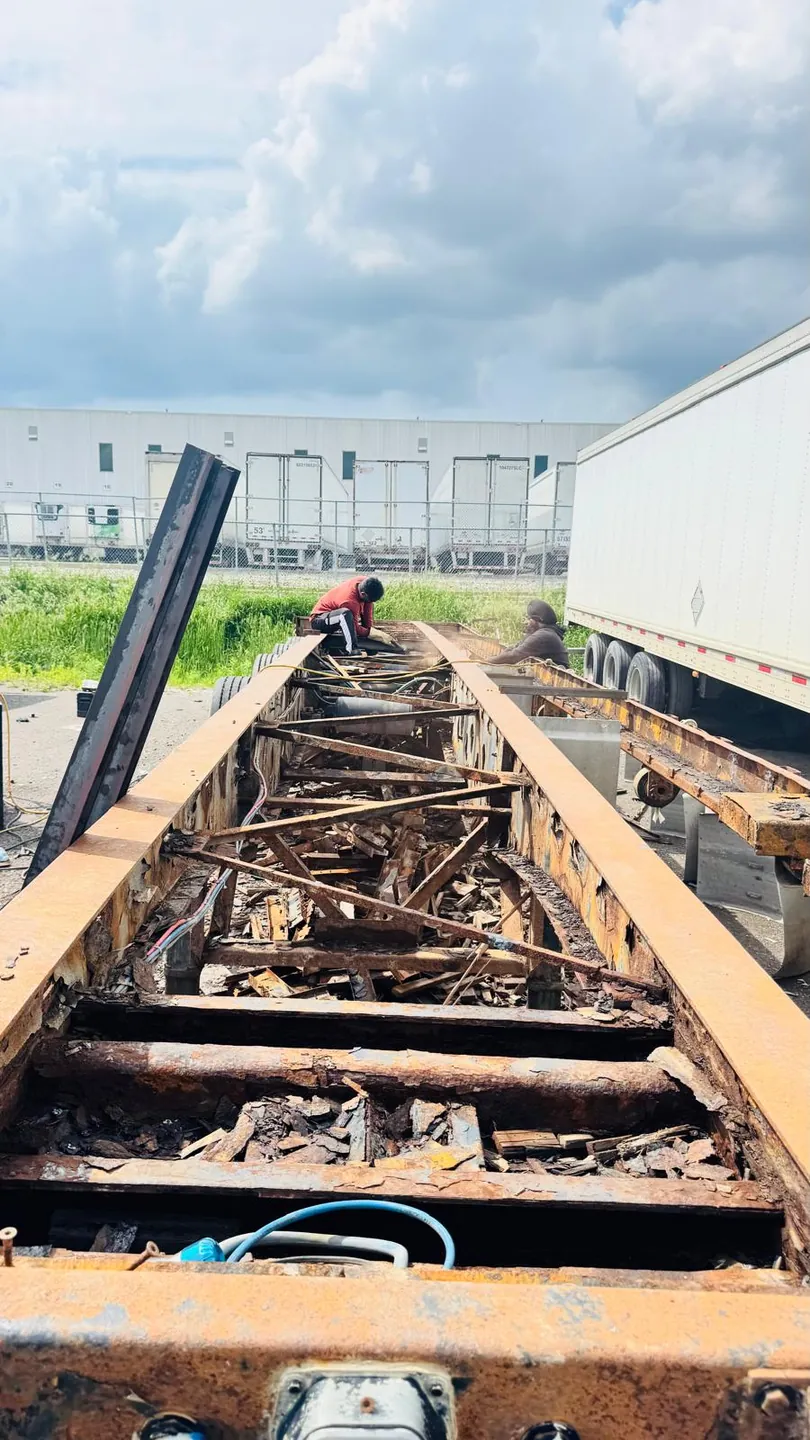
- How big is the repair? A crack, bracket or panel is mobile territory. A full floor or frame rebuild may need a shop. Many jobs, such as replacing rusted cross members under a dry van floor, can still be done on site.
- What is the metal? Steel and aluminum trailer work is routine on site. See our aluminum crack repair guide.
- Is there a safe, level place to work? If not, the job may need to be moved.
Site prep checklist (the part most guides skip)
Whether the repair is done well and quickly often depends on the site. Before the welder arrives:
- Level, firm ground. Soft or sloped ground is hard to work on and unsafe under a jacked trailer.
- Room to work. Leave space around the repair area and for the service truck. Tight dock positions can make rear repairs difficult.
- Clear flammables. Move fuel, oil, pallets, cardboard and loose cargo well away. Welding throws sparks.
- Tell us what is inside. Insulation, foam, wooden floors and cargo near the repair are fire risks, and a reefer or insulated body needs extra care.
- Unload the area. If the repair is on the floor or a wall, empty it first.
- Think about wind and rain. Wind blows away the shielding gas and wet metal is a problem. A spot out of the wind or under cover helps, and in the worst weather the job may be better rescheduled.
- Photograph first. Close-up and wide photos of the damage plus the unit type let us bring the right material the first time.
The hybrid option
Some jobs split. Parts such as brackets, ramps or racks can be fabricated in a shop and installed on site. Our guides to custom loading ramps and headache racks describe this kind of job. Ask about it if your repair is part repair, part custom build.
Quality: what to ask any welder
- Will the crack be ground out and traced to its end, or just welded over?
- Will the area be reinforced where it was overloaded?
- For aluminum, are the correct process and filler used?
- Will you get a price before work starts?
The questions are the same for a mobile welder or a shop. For where cracks start and what to check, see our frame crack inspection checklist.
Where we work
Our mobile trailer welding truck serves Brampton, Mississauga, Toronto, Vaughan, Milton, Oakville and Caledon, 7 AM to 7 PM, seven days a week, with no overnight service. Structural repairs fall under trailer welding and fabrication.
How to get a quote
Send close-up and wide photos and the unit type to WhatsApp 437-985-7311. We tell you whether the job can be done on site and give a price before we start.
Call 437-985-7311 WhatsApp photos
Frequently asked questions
Is mobile welding as strong as shop welding?
The strength of a weld comes from joint preparation, the right process and filler, and the welder's skill, not from the building. A mobile welder who grinds out the defect, preps clean metal and reinforces where needed can produce the same result as a shop. What a shop adds is a controlled environment, which matters most for special alloys or work that needs precise heat control.
What trailer repairs can be done at my yard?
Many common ones: cracked cross members, suspension hanger cracks, landing gear brackets, ICC bumpers, door and hinge repairs, side panels, roof bows and bumper or deer guard repairs. If you are unsure, send photos and we will say honestly whether it can be done on site.
When should I tow the trailer to a shop instead?
When a job needs a lot of cutting out and rebuilding of large sections, a jig or press, a controlled indoor space, or special material handling. Also when the part is small and you can simply bring it to the welder. We will tell you if your job fits that description.
Does weather stop mobile welding?
Heavy rain, snow and strong wind can. Wind blows shielding gas away from the weld and water on the metal is a risk. Outdoor work can often continue with the unit positioned out of the wind or under cover. If conditions are bad on the day we will talk to you about rescheduling.
What do I need to prepare before the mobile welder arrives?
Park the unit on level, firm ground with room to walk around it, empty or unload the area to be repaired, move fuel, pallets and anything flammable away, and tell us about any cargo or insulation inside the trailer near the repair. Send photos beforehand so we can bring the right material.
How much does a mobile welding repair cost?
It depends on the damage, the material and how long the job takes, so we do not quote blind. Send photos to WhatsApp 437-985-7311 and we give you a price before we start.
Related guides
More Baaz Welding guides · Welding & fabrication · Winter salt checklist · Frame crack checklist